I'm a big fan of innovative creativity in eLearning. There just isn't enough of it these days. So this year I'd like to simply highlight creativity in whatever form it comes to me. This one comes from PTK Learning. Enjoy!
Monday, December 26, 2011


Friday, December 23, 2011
2012 - The Year of the LMS
I guess I never thought I'd hear myself say that. But something strange is afoot in the Learning Management Software market. With the shift of the internet from 1.0 to 2.0, and beyond, it was easy to envision a world no longer needing the LMS of old. So the question remains. What does the new incarnation of the LMS look like? Or does it just go away?
I'll admit that I've often ignored the LMS market. I've always been very interested in LEARNING, and management systems just never really had much to do with learning. The early systems had everything to do with tracking, recording, reporting, and monitoring. These are all business functions that need to occur at some level and so these systems do serve a purpose. I will readily admit that. But rarely does an LMS have anything to do with instructional design. But maybe that's about to change.
I don't have any links to stories that back me up on this, but I get a strange feeling that 2012 is the year we begin to see major changes in the LMS market. And I'm not talking about the continuing mergers, and acquisitions in this space. I'm thinking about a new breed of Learning Management Systems/Software. Perhaps someone figures out how to convert social engagement into tangible learning points, or other type of corporate currency that proves, or identifies, competency. But, honestly, I'm just not sure what that means, or what it might look like. I know some of you do. Because I know you're out there working on it.
Maybe the LMS finally gets completely sucked into Talent Management software and course completions simply become part of your HR file...as many do already. And maybe the big story will be that there IS no story: Every possible LMS either dies or gets acquired into HR or other management software. And maybe what that means is that instructional designers need to start seeing the bigger picture. If the enterprise is pulling together all these, once separate, software systems into something called Talent Management, then maybe there needs to be a hybrid study of Talent Systems Design.
What do you think?
And Happy Holidays!!!
I'll admit that I've often ignored the LMS market. I've always been very interested in LEARNING, and management systems just never really had much to do with learning. The early systems had everything to do with tracking, recording, reporting, and monitoring. These are all business functions that need to occur at some level and so these systems do serve a purpose. I will readily admit that. But rarely does an LMS have anything to do with instructional design. But maybe that's about to change.
I don't have any links to stories that back me up on this, but I get a strange feeling that 2012 is the year we begin to see major changes in the LMS market. And I'm not talking about the continuing mergers, and acquisitions in this space. I'm thinking about a new breed of Learning Management Systems/Software. Perhaps someone figures out how to convert social engagement into tangible learning points, or other type of corporate currency that proves, or identifies, competency. But, honestly, I'm just not sure what that means, or what it might look like. I know some of you do. Because I know you're out there working on it.
Maybe the LMS finally gets completely sucked into Talent Management software and course completions simply become part of your HR file...as many do already. And maybe the big story will be that there IS no story: Every possible LMS either dies or gets acquired into HR or other management software. And maybe what that means is that instructional designers need to start seeing the bigger picture. If the enterprise is pulling together all these, once separate, software systems into something called Talent Management, then maybe there needs to be a hybrid study of Talent Systems Design.
What do you think?
And Happy Holidays!!!
Thursday, December 22, 2011
Creating Passionate Learners 2005 = same in 2011
For those of you that were not into the blogosphere WAY back in...oh... say... 2005 or 2006, the name Kathy Sierra is probably new to you. It's about time we ALL start learning how to "Create Passionate Users", or in our case Create Passionate Learners...and I'd argue they're the same thing, but I digress. Let me start with why I am blogging on this topic.
@moehlert tweeted a reminder of an IT Conversations recording of her keynote from the Tools of Change conference (2/16/2011). So, I took 25mins and listened to her story. I already knew most of the story but its always fun to get a refresher from thought leaders who bring a unique perspective to our industry. And yes, she IS a learning person...turned blogger...turned top-selling, uber-tech author at O'Reilly.
If you are new to Kathy Sierra, after listening to the recording above, you should read the archives of her blog at headrush.typepad.com. That will give you a pretty good idea of where she stands on turning users/learners into PASSIONATE learners/users.
My favorite moment in blogging...
I started blogging in August 2005 and I did not have anyone "following" me at the time. So you can imagine how psyched I was when, after 4 months blogging, Kathy posted a comment on my post 2005 Review of eLearning.
Kathy Sierra said...
THURSDAY, DECEMBER 29, 2005 
As I was writing this post, and reviewing old posts, so many things struck me:
Because, ya know, it is that time of year where everyone reviews the past year and pontificates about the year to come.
But more importantly, are things STILL so much the same? I've done a lot since 2005 and I'm sure all of you have too, and yet I wonder why so much of our industry still feels the same. We've seen new iPhones, iPads, and iOS, Android, tablets, twitter, Facebook, LinkedIn, YouTube, HTML5, apps, apps, and more apps, and on and on and on. So why are still talking about building courses? Why do job reqs still read the same?
My guess is that if we started thinking like Kathy and focused on what can we do to help our users kick ass in THEIR job that we would be looking at eLearning A LOT differently.
So, lets make 2012 the year eLearning actually becames about the learner!
P.S.
Here are some other posts where I reference Kathy Sierra.
@KathySierra Learns Spanish via Twitter
Should We Twitter Face-to-Face?
Cubicles Cause Brain Damage
@moehlert tweeted a reminder of an IT Conversations recording of her keynote from the Tools of Change conference (2/16/2011). So, I took 25mins and listened to her story. I already knew most of the story but its always fun to get a refresher from thought leaders who bring a unique perspective to our industry. And yes, she IS a learning person...turned blogger...turned top-selling, uber-tech author at O'Reilly.
If you are new to Kathy Sierra, after listening to the recording above, you should read the archives of her blog at headrush.typepad.com. That will give you a pretty good idea of where she stands on turning users/learners into PASSIONATE learners/users.
My favorite moment in blogging...
I started blogging in August 2005 and I did not have anyone "following" me at the time. So you can imagine how psyched I was when, after 4 months blogging, Kathy posted a comment on my post 2005 Review of eLearning.
 |
| The chart that Kathy references in her comment |
What a great post Brent! You've given me about 15 different things to think about here... and I could not agree more. What I didn't mention in my "is it interesting" post (and thanks very much for the nice comments) -- but that you must have picked up on -- is that the ones who were approving my checklist were the ISD'ers and the heads of the LMS team at Sun. They basically said, "If it isn't supported technically by the LMS, it *must not be relevant.* Talk about tail wagging the dog... ; )
I'm especially interested in that diagram of courses vs. collaboration, too.
Thanks for this great blog, Brent. I'm so glad I found it.
I'm especially interested in that diagram of courses vs. collaboration, too.
Thanks for this great blog, Brent. I'm so glad I found it.

As I was writing this post, and reviewing old posts, so many things struck me:
- How amazingly powerful blogging and social media was and is,
- how easy it is to forget about our learners in the process of ISD,
- how much I miss Kathy's blog posts,
- how much I wish she'd agree to speak at DevLearn 2012,
- and how strange it is that my review of 2005 could easily be my review of 2011.
Because, ya know, it is that time of year where everyone reviews the past year and pontificates about the year to come.
But more importantly, are things STILL so much the same? I've done a lot since 2005 and I'm sure all of you have too, and yet I wonder why so much of our industry still feels the same. We've seen new iPhones, iPads, and iOS, Android, tablets, twitter, Facebook, LinkedIn, YouTube, HTML5, apps, apps, and more apps, and on and on and on. So why are still talking about building courses? Why do job reqs still read the same?
My guess is that if we started thinking like Kathy and focused on what can we do to help our users kick ass in THEIR job that we would be looking at eLearning A LOT differently.
So, lets make 2012 the year eLearning actually becames about the learner!
P.S.
Here are some other posts where I reference Kathy Sierra.
@KathySierra Learns Spanish via Twitter
Should We Twitter Face-to-Face?
Cubicles Cause Brain Damage
Wednesday, December 21, 2011
HOJOKI.com - Aggregating Your Social Stream

It's interesting. Curating your social stream could be the next big thing...or maybe just the next thing.
Tuesday, December 20, 2011
Little Bits of STEM Learning
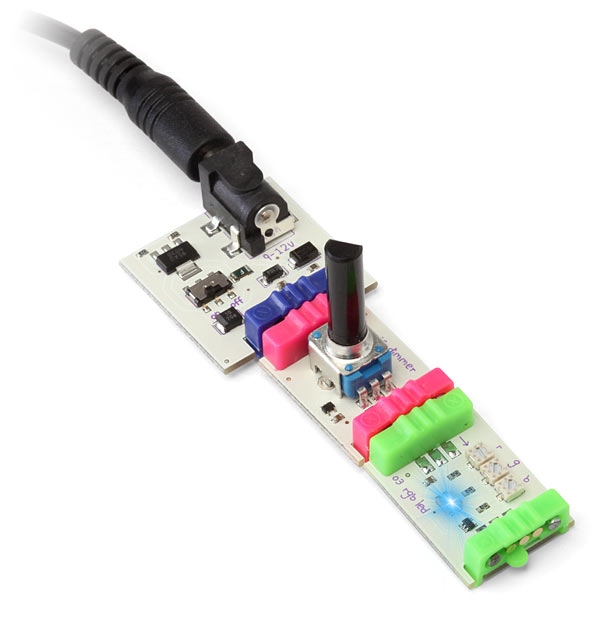
So, if you like to tinker with electronics or want your kids to discover a passion for electronics, then this Little Bits Starter kit might be just the thing for you last minute holiday shoppers.
If you are already a fan of the Arduino then you'll love this for your kids. It's similar to the Arduino only easier to work with. The different circuit parts snap together with magnets and everything is color coded making it a great starter kit for kids, or even adults that don't think they have any technical skills but want to play with electronics.
From a learning perspective I do have a concern that since it is SO easy to snap the parts together and make things work I wonder if kids will have the motivation to dig deeper into the understand of WHY it worked. Just because you can make a light turn on and off with a switch by placing magnets together, doesn't mean you truly understand the completion of a circuit. I don't want to knock this because I LOVE IT, but I'd like to hear how someone has integrated this into a classroom or other learning setting.
littleBits (re)intro from ayah bdeir on Vimeo.
You can buy the starter kit for $89 at the Little Bits Store.
Templates: Love 'em or Hate 'em?
Do you use templates? Are you a purist and despise templates? Personally, I don't like to take a hard line on this topic.
I like to think of all templates as time-savers and as such they become productivity tools. They don't impact my instructional design. Unless a certain template is requested or mandated, finding a template also serves as inspiration. And quite frankly every custom project you do should also be considered a template for any other similar project that appears in the future. It has nothing to do with being lazy, but has everything to do with being productive and getting better at what you do.
Consider all of the things you were NOT able to do with the first project. When a similar project starts you now have much of the work completed and you can use your development time to add, or improve the parts of the "template" that you now have time for.
Also consider a customer asking you to do work within an unreasonably short timeframe. Instead of not being able to do the job, you could inquire if a pre-designed template solution would be okay. I think its always worth asking.
The internet provides an endless supply of templates for SO many different projects. I'll share this one I just discovered from LOVE vs DESIGN. Baked Goods Gift Tags.
Download Template here
But if you're looking for eLearning Templates a Google search will turn up many, but I'd recommend starting with the eLearning Brothers at elearningtemplates.com
I like to think of all templates as time-savers and as such they become productivity tools. They don't impact my instructional design. Unless a certain template is requested or mandated, finding a template also serves as inspiration. And quite frankly every custom project you do should also be considered a template for any other similar project that appears in the future. It has nothing to do with being lazy, but has everything to do with being productive and getting better at what you do.
Consider all of the things you were NOT able to do with the first project. When a similar project starts you now have much of the work completed and you can use your development time to add, or improve the parts of the "template" that you now have time for.
Also consider a customer asking you to do work within an unreasonably short timeframe. Instead of not being able to do the job, you could inquire if a pre-designed template solution would be okay. I think its always worth asking.
 |
| Baked Goods Gift Tags |
Download Template here
But if you're looking for eLearning Templates a Google search will turn up many, but I'd recommend starting with the eLearning Brothers at elearningtemplates.com
Monday, December 19, 2011
Learning Web Design & Development is fun when Gamified
Gamification is a buzzword that is frowned upon by many. It's more of a trend than anything else and since it's hanging around I thought this example might be fun to share. This blog post from The Gamification blog landed in my Google reader.
The blog post points out the use of gamification elements in the web development learning environment created by Team Treehouse.
I have a couple reasons for sharing this with you:
1) I really like the design of both the site and the video lessons. The videos are well done. The production quality is great, and the few free lessons that I reviewed were well scripted and flowed quite nicely.
2) While I am not a believer in the gamification of all learning, I do think in certain instances it makes sense for that audience.
Whether you are a fan of gamification or not, I just figured this was a nice example that you might want to review for any number of reasons. Heck, you may even want to learn how to program iOS and make your own learning app. Go for it!
Enjoy!
 |
| TeamTreehouse.com |
I have a couple reasons for sharing this with you:
1) I really like the design of both the site and the video lessons. The videos are well done. The production quality is great, and the few free lessons that I reviewed were well scripted and flowed quite nicely.
2) While I am not a believer in the gamification of all learning, I do think in certain instances it makes sense for that audience.
Whether you are a fan of gamification or not, I just figured this was a nice example that you might want to review for any number of reasons. Heck, you may even want to learn how to program iOS and make your own learning app. Go for it!
Enjoy!
Building the Instructional Designer's Relevance in 2012 - Aaron Silvers
 |
| @aaronesilvers |
Friday, December 16, 2011
ZebraZapps Official Launch at DevLearn - 60 Day Trial

You can login for a 60 Day Trial to check out all the great features. I would highly recommend attending one of their webinar/workshops to get you started as well. Let me know what you think.
Thursday, December 15, 2011
eLearning Job Listings, Indeed!
Indeed is simple. There is a "what:" field and a "where:" field. I entered "eLearning" as the what, and Phoenix, AZ as the where and I was quite surprised by the results. I didn't think there were that many companies in the Phoenix area that even knew they needed instructional designers, or training specialists, or eLearning designers & developers.
And while the list of job openings is impressive I also noticed the sidebar with filtering capabilities. You can sort by Salary Estimate, Title, Company, Location, Job Type, and Employer/Recruiter.
So, the interface is super easy to navigate and it makes sense. But I wanted to know more about the detailed results. I clicked on one of jobs and it took me to Sologig.com. Hhhmmm. Interesting. I hadn't thought of a contracting site as being a part of a job aggregation, but DUH, it makes sense…why not?
If you are in search of a job or just curious about the market in your area, I would highly recommend running a quick search. Tell me what you think!
Wednesday, December 14, 2011
1000+ eLearning Posts in 6 years
Milestones are important. I remember looking back at my blogging at the 5 year mark, but I've never thought about quantity of posts as a milestone...until I saw 1000 posts in the blogger admin section.
From post 1 to 1000 it's been an incredible ride. Seriously! New technology arrived like the iPhone and the iPad. mLearning became so big that The eLearning Guild dedicated an event with mobile learning as the singular focus, mLearnCon. So much has happened that I'd need a lot more time to list every item.
But overall it's been an amazing experience and I'm looking forward to crafting 1000 more posts about tech and learning.
From post 1 to 1000 it's been an incredible ride. Seriously! New technology arrived like the iPhone and the iPad. mLearning became so big that The eLearning Guild dedicated an event with mobile learning as the singular focus, mLearnCon. So much has happened that I'd need a lot more time to list every item.
But overall it's been an amazing experience and I'm looking forward to crafting 1000 more posts about tech and learning.
More 3D Training in the UK?
 |
| www.vbsworlds.com |
I've often wondered why Europe seems more accepting of interactive 3D technologies than the US. The first interactive 3D tool I used was called Superscape. They were headquartered in Germany... I think.
Well, since I'm on this 3D kick from yesterday's post I'll point you to this cool 3D case study from CaspianLearning.com: VBSWorlds Used to Pioneer 'Step-in, Step-out' eLearning in Defense
There are lots of discussions around the use of 3D spaces in learning. So, let me know what you think. If you have thoughts or concerns leave me a comment.
Tuesday, December 13, 2011
ProtoSphere - MS Lync Server - SharePoint Server = 3D Experience Sharing Learning Collaborating
Here is an interesting case study released by Microsoft: Drug Research Firm Cuts Costs and Boosts Training Quality with Collaboration Solution.
Since developing my first interactive 3D simulation, I have seen the learning potential in action. But my experience was well over a decade ago. Its been frustrating to know what's possible and yet still see the eLearning industry struggle to make a place for interactive 3D solutions. It was strange to see environments like SecondLife basically disappear, when they held so much potential.
But it is with great hope that I see companies like ProtonMedia partnering with the likes of Microsoft to make 3D training a reality. Yes, I know the military has been doing it for years, and others have too. But what I like to see are executives like Mike Wilkinson at PPD taking a risk and trying out something new...like interactive 3D collaborative spaces. And after all, cutting travel costs by $2million isn't bad either.
More links regarding the story:
Kaplan eduNeering
3D Virtual Collaboration and Multi-Touch Solutions Win 2011 Microsoft Life Sciences Innovation Awards
Since developing my first interactive 3D simulation, I have seen the learning potential in action. But my experience was well over a decade ago. Its been frustrating to know what's possible and yet still see the eLearning industry struggle to make a place for interactive 3D solutions. It was strange to see environments like SecondLife basically disappear, when they held so much potential.
But it is with great hope that I see companies like ProtonMedia partnering with the likes of Microsoft to make 3D training a reality. Yes, I know the military has been doing it for years, and others have too. But what I like to see are executives like Mike Wilkinson at PPD taking a risk and trying out something new...like interactive 3D collaborative spaces. And after all, cutting travel costs by $2million isn't bad either.
More links regarding the story:
Kaplan eduNeering
3D Virtual Collaboration and Multi-Touch Solutions Win 2011 Microsoft Life Sciences Innovation Awards
Virtual Knee Surgery - eLearning Example - Oldie but a Goodie

And please feel free to comment if you don't believe this is eLearning. I know you're out there. Don't be shy. Tell me why this is not eLearning.
I remember when this first came out I used it as an example in a FLASH eLearning Development course I was teaching at The Art Institute of Phoenix. Wow, it feels like a lifetime ago.
I like the simplicity of the design. The animation helps reduce the gross-out factor. But if you are the type that needs the reality of the procedure then there are photos available as well. I like that it offers both. The interactivity is simple but effective in my opinion.
Friday, December 09, 2011
eLearning Examples from Articulate Community Showcase

A jackpot of examples can be found at the Articulate Community Showcase.
STOP! Before anyone starts writing any hate mail to me about bias towards one product please understand that I don't care about the tool that was used in these examples.
Yes, it's quite obvious that Articulate is a growing company with many in our industry using their product. And yes, it's quite obvious that these are good examples that showcase the specific features of the Articulate suite of tools. But PLEASE now that it's NOT about the tool!
Inside this extensive list of examples are projects that ALSO contain a significant amount of instructional design, video production, audio production, script writing, graphic design, interface design, and user experience design.
The tools are always secondary to the creativity of your design.
None of these examples would be part of the Articulate showcase if they were not well designed regardless of the tool. I hope you can use them as a source of inspiration no matter what your tool of choice.
Thursday, December 08, 2011
Is Image Memorability Important to eLearning?
I discovered this interesting research report from a tweet that pointed to an article in Scientific mind titled Haunting Scenes. Read at the end why I found more info at MIT News.
I wonder how a silly pic like this, on the right, would rank in a memorability algorithm?
Exciting Research
The interesting news is that the research found "the most memorable photos are those that contain people, followed by static indoor scenes and human-scale objects." Landscapes seemed to be forgettable. According to previous research humans can remember thousands of images, but understanding what makes certain images more memorable than others was not known. This study focused on memorability of an image as a measurable trait. And they were successful enough to create an algorithm that can predict memorability. Cool!
Disappointing Ideas Regarding Application of Results
The most frustrating part about the article?
I understand that Facebook is hot and you need to encourage interest in your research in order to get grants and bla, bla, bla, but I was hoping to hear you say something about LEARNING. I'm thinking that memory is tied to learning some how, right?
Applying These Results to Learning Design
My apologies to the researchers and to MIT for my pedestrian response to academic research. But I see your research as being important to learning, education, and training more than Facebook and vacation photos. Shouldn't we be more excited about the possibility of selecting better images that help learners retain more important information in long term memory? Memory does have a little to do with learning.
My favorite quote from the lead researcher, Phillip Isola:
But more importantly it helps us do our jobs better. Creating media for eLearning courses is part of the job. Understanding what makes an image memorable is a BIG DEAL!
And yes, there is a lot more to the design of instruction than the memorability of the images used in that instruction. But it seems to me like there is a useful connection here. That's all I'm really saying. Perhaps I'm wrong, and I completely missed the point on this one. Oh well, wouldn't be the first time.
Read the research report yourself and let me know what you think.
 |
| Brent Schlenker Program Director for DevLearn |
I wonder how a silly pic like this, on the right, would rank in a memorability algorithm?
Exciting Research
Disappointing Ideas Regarding Application of Results
The most frustrating part about the article?
"Such an algorithm could be useful to graphic designers, photo editors, or anyone trying to decide which of their vacation photos to post on Facebook" - Aude Oliva, associate professor of cognitive science and a senior author of the paper.Seriously, MIT? That's the best you can come up with? <insert face in hands>
I understand that Facebook is hot and you need to encourage interest in your research in order to get grants and bla, bla, bla, but I was hoping to hear you say something about LEARNING. I'm thinking that memory is tied to learning some how, right?
Applying These Results to Learning Design
My apologies to the researchers and to MIT for my pedestrian response to academic research. But I see your research as being important to learning, education, and training more than Facebook and vacation photos. Shouldn't we be more excited about the possibility of selecting better images that help learners retain more important information in long term memory? Memory does have a little to do with learning.
My favorite quote from the lead researcher, Phillip Isola:
"Pleasantness and memorability are not the same"I know, in my experience designing eLearning courses, that making graphics simply looked nice, and pleasant, to the corporate stakeholders was the goal if not a battle you had to fight. Corporate training developers are often asked to PROVE why they chose the graphic design elements they did. And many times the selection of images to use are decisions based on the whims of clients, and Sr. Management. Research like this is extremely helpful to our community in making the case for the design decisions we make.
But more importantly it helps us do our jobs better. Creating media for eLearning courses is part of the job. Understanding what makes an image memorable is a BIG DEAL!
And yes, there is a lot more to the design of instruction than the memorability of the images used in that instruction. But it seems to me like there is a useful connection here. That's all I'm really saying. Perhaps I'm wrong, and I completely missed the point on this one. Oh well, wouldn't be the first time.
Read the research report yourself and let me know what you think.
---------------------------------
COMMENT: I don't pay to read Scientific American and so I only had access to 5 paragraphs of the article. So, did those 5 paragraphs entice me to PAY because I became interested? No. A quick google search of the researcher from MIT revealed his findings in other more user-friendly online magazines and the actual complete research paper. Sorry, Scientific American. I liked the article in MIT NEWS.Friday, December 02, 2011
RIP @TerrenceWing - eLearning Community Loses a Thought Leader

I was up early this morning (4am MTN time). I couldn't sleep and so I grabbed my phone and checked on what my east coast peeps might already to up too. And to my shock and disbelief I saw a tweet from @lilybiri ...
@trishuhl Shocked and sad about the news that @TerrenceWing passed away - met him IRL on #DevLearn #ASTDI immediately sent her a DM asking for clarification. I thought perhaps it was a misunderstanding. She immediately replied saying she heard it from Rick Zanotti. And that's when I knew it was real. A quick double check of twitter revealed this post from @RickZanotti ...
I just received word that my good friend, our good friend, @TerrenceWing, passed away earlier today. Still in shock. Will say more later.I've been following the twitter stream and just checked out his Facebook page. Terrence was a big, hands on, supporter of social media. Amidst the sadness of losing him, I'm discovering a new found hope in the new technologies that are so often blamed for ill will. I see the number of lives touched by one man in an endless stream of twitter commets and Facebook postings. And we will always have his podcast interviews with Rick.
 |
| Terrence, Rick, and Me |
Social media can teach us a lot. But when someone dies there is an intense moment of reflection...at least for me. I am a firm believer in people, NOT technology. The technology simply enhances and amplifies our ability to reach other people. Soon, the wonder of this new technology will disappear and we'll be left with just the amazing social enhancements it provides. But its the ability to connect with many more people, more closely, that makes this technology special.
I dare you to walk in the footsteps of Terrence Wing and embrace social media with the same passion and enthusiasm. Do it! And share your skills with a friend or colleague. It would be a fitting tribute to Terrence. And honestly, if you can do nothing else today just try sharing a smile with someone... anyone. I will never forget that big smile he shared so freely with everyone he met.
We miss you Terrence! Rest in Peace.
Thursday, December 01, 2011
Physics of the Future leads to the Learning of the Future
 |
| NPR Story - Text + Audio |
eLearning Follows Technology
I've often said that our industry is a lagging indicator. Some economist once used that term and to an economist I'm probably butchering the term. However, I use it to simply mean that we don't invent new technologies. That's NOT our job. Our job as designers/developers of learning experiences is to understand the current technologies available to us and our users. For example, some organizations are still developing strategies for mobile learning solutions with FLASH. Oops.
Its our job to understand the CONTEXT of our learners work environment FIRST. That includes a complete assessment of the current technology available to our learners. One of my pet peeves is Sharepoint bashing. Yet in MANY organizations that's all they have and its as close to a "social media" platform that they'll ever see. Some eLearning pundits will still speak quite negatively about Sharepoint. What's the point? (Pun intended) If that's what you've got to use then why not use it? Buying ANOTHER system and forcing your users to learn and manage BOTH is not likely to win you any converts to support your learning solution.
Certain technologies never make it into the mainstream consciousness. Let's take RSS for example. I'm a big fan for many reasons. Its such a simple technology that can be used in very innovative ways. I was talking about it well over 5 years ago and today my guess is that many still don't know or care about what it is. AND THAT'S OKAY! RSS, or something like it, will take hold and none of our learners will be the wiser. They don't care. And that's okay too. They don't need to care. But WE DO!
What Does the Future Hold?
Doesn't that question intrigue us all even a little bit? At DevLearn, Dr. Kaku made the case for some very radical new technologies coming in 10, 30, 50, and even 100 years. You can read his book Physics of the Future: How Science will Shape Human Destiny and Our Daily Lives by the Year 2100 to find out what he talked about.
Even if you only see yourself living for another 50 years, then what he foretold should have at least SOME impact on you. For example, we are all currently very excited our smart phones. In essence these devices give us access to a very large percentage of the world's knowledge in the palm of our hands. Doesn't that blow your mind? And that's REAL! That's TODAY! Not some pipe dream. So, is it that hard to believe that in 40 or 50 years (or less) we will have the same access to knowledge and information via a contact lens? If you are one of the people who didn't understand the relevance of Dr. Kaku at an eLearning event then this article is for you. University of Washington researches have proven that bionic contact lens technology is possible...and safe.
My Fears for our Industry
I cringe at the thought of a powerpoint to contact lens conversion tool. I know some of you were thinking it. Let me just remind everyone that with the first mobile devices all we did was squash our elearning "courses" down to fit on the smaller screen. And we all know that did not work. We can do so much better. And many of your colleagues have do a LOT better. Check out the
I don't care if you didn't like Dr. Kaku, but don't blame me if you're in that organization in 30 years that thinks a "blink now" button will be a good idea to replace the click next button.
Subscribe to:
Posts (Atom)